
Starting your fitness journey can feel confusing or even intimidating, especially if you’re not sure where to begin. Maybe you’ve tried before and struggled to stay consistent, or you’re completely new and unsure which exercises to start with. This beginner fitness guide is here to help you take those first steps with confidence.
This guide covers everything you need to start your journey toward a stronger, healthier, and more energized you.
What Is a Beginner Fitness Guide?
A beginner fitness guide is a simple, step-by-step plan that helps you get started with exercise and healthy habits, even if you’ve never worked out before. It breaks down workouts, daily routines, and lifestyle tips into easy steps so you can follow along without feeling overwhelmed.
Think of it as your personal roadmap to better health, filled with practical beginner health and fitness tips to help you build a solid foundation for lasting results.
How to Start a Fitness Journey
Starting a fitness journey is all about taking small steps that you can stick with. Before diving into workouts, it helps to focus on building consistency and on how to build exercise habits that fit your lifestyle. Planning your approach, setting simple goals, and choosing activities you enjoy make it easier to stay motivated and create a routine that lasts.
-
Set Realistic Fitness Goals
Setting realistic fitness goals is key to staying motivated and seeing progress. If your goals are too big or unclear, you might feel discouraged. Start with small, achievable targets that fit your current fitness level and lifestyle. Clear, realistic fitness goals for beginners give you direction and help you stick to your plan.
-
Choose Activities You Enjoy
Exercise doesn’t have to feel like a task you “should” do. When you pick activities that you genuinely enjoy, it becomes much easier to stay consistent and actually look forward to moving your body. Whether it’s going for a walk (one of the best ways to exercise), dancing around your living room, swimming, or following a short home workout, make sure it’s something that feels fun. When you enjoy what you’re doing, working out stops feeling like a chore and becomes a habit you actually want to keep, which helps you stay motivated over time.
-
Start Slowly and Progress Gradually
When you start exercising, it can be tempting to do a lot right away. But pushing yourself too hard in the beginning can lead to injuries or burnout. Instead, start with workouts that feel comfortable for you and slowly increase the time or intensity as your body gets stronger. Going at your own pace helps you build confidence and makes it easier to stay consistent. Focusing on easy fitness habits for beginners from the start can help you build a routine that feels natural and is easier to maintain over time.
Types of Exercise Beginners Should Know
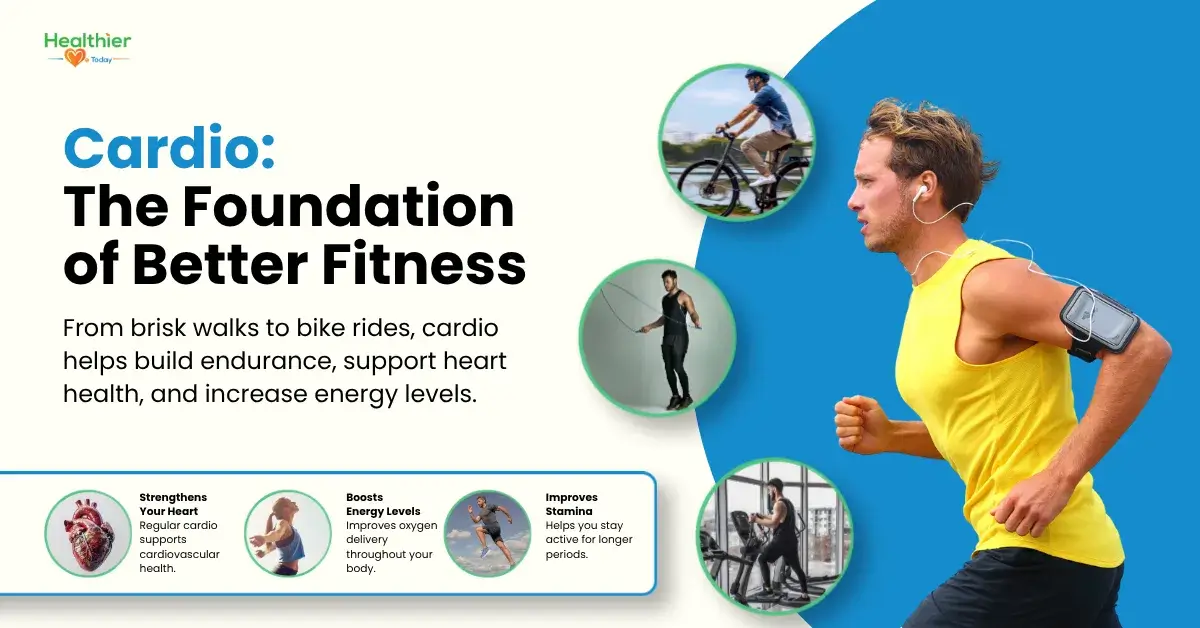
When starting a fitness routine, it is important to understand the different types of exercise. Each type helps your overall fitness in its own way.
Cardio Exercise
Cardio exercise includes activities that increase your heart rate and get your body moving, such as walking, jogging, cycling, or dancing. Doing cardio regularly helps strengthen your heart and improve your stamina, so everyday activities start to feel easier.
Strength Training
Strength training helps build muscle mass and supports your overall fitness. It’s not only about building muscle, but it can also improve your posture and make everyday movements like lifting, carrying, or climbing stairs easier. As a beginner, you can start with simple bodyweight exercises such as squats, lunges, or push-ups, even at home. Over time, these exercises help your body become stronger and more capable in daily activities.
Flexibility and Mobility
Flexibility and mobility exercises help your body move more comfortably and keep your joints working well. Simple stretches, whether you do them in the morning or before bed, can help loosen tight muscles and improve how your body feels throughout the day [health.harvard.edu]. Over time, these small habits can also help lower the risk of strains or injuries. Adding flexibility exercises to a simple workout routine for beginners at home is an easy way to stay active without any special equipment or a gym.
Balance and Stability
Balance and stability exercises help you stay steady and move with better control in your daily activities. They train different muscles to work together, which can improve coordination and lower the risk of falls or injuries. Simple exercises like standing on one leg, walking heel-to-toe, or doing slow, controlled movements can help improve your balance over time [mayoclinic.org]. Including these exercises in your routine also helps strengthen your core and supports your overall fitness.
Beginner Workout Routine
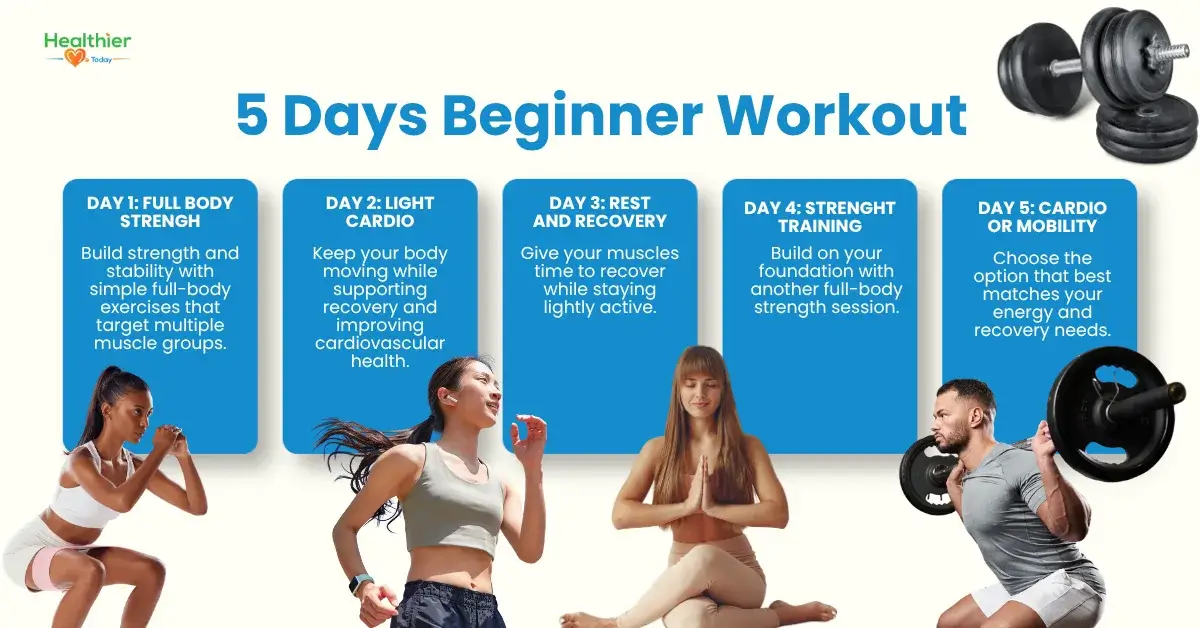
When you’re starting your fitness journey, having a simple workout plan can make things much easier. It helps you know what to do each day so you’re not left wondering where to begin. This daily exercise routine for beginners is designed to keep things balanced while helping you build fitness step by step.
Day 1: Full Body Strength
Start your first day with simple full-body strength exercises that work several muscles at once. Squats, lunges, push-ups, and planks are excellent beginner exercises that target your legs, core, and upper body in one workout.
Take your time and focus on doing each movement with good form rather than rushing through the exercises. This workout helps you build strength, improve stability, and prepare your body for more challenging exercises as you advance.
Day 2: Light Cardio
On day two, focus on light cardio to keep your body moving without putting too much strain on your muscles after your strength workout. Activities like a brisk walk, a bike ride, swimming, or a light jog work well for beginners.
Light cardio helps improve your heart health and gradually builds endurance. It also increases blood flow to your muscles, which can help reduce stiffness and support recovery from your previous workout. Even 20 to 30 minutes of gentle movement can make a difference.
Day 3: Rest or Active Recovery
Day three is your time to slow down and give your body a break. Rest is important because it helps your muscles recover after your workouts [uclahealth.org]. Taking a day like this can also help prevent soreness and keep you feeling motivated to continue with your routine.
If you still feel like moving a little, you can do light activities like stretching, taking a relaxed walk, or doing a short yoga session. These gentle movements keep your body loose and help you recover while still staying active.
Day 4: Strength Training
By day four, your body has had some time to recover, making it a great moment to focus on strength again. You can repeat some of the same exercises from day one, such as squats, lunges, push-ups, and planks. These movements work multiple muscle groups at once and are very effective for beginners who want to build strength without gym equipment.
As you go through the workout, move slowly and focus on each exercise with proper form rather than rushing through the set. This helps prevent injuries and makes sure the right muscles are doing the work.
Day 5: Cardio or Mobility
By day five, you can choose between cardio or mobility. If you still have energy, try a light cardio session. You can go for a brisk walk, ride a bike, or take a short jog. This will help you stay active and keep up the routine you’ve been building during the week.
If your body feels a little tired or stiff, this is a great day to focus on mobility instead. Gentle stretching, simple joint movements, or a short yoga flow can help loosen your muscles and improve your body’s movement.
Do You Need to Go to the Gym?
You don’t need a gym to get fit or start your fitness journey. Many effective exercises, like bodyweight strength moves, walking, or stretching, can be done at home or outdoors with little to no equipment [healthline.com]. This makes it easy to follow a beginner exercise routine without gym while still building strength, stamina, and flexibility.
The key is to build sustainable fitness habits you can keep up over time. Whether you choose a gym or home workouts, what matters most is consistency and finding what works for your lifestyle.
The Importance of Nutrition
Exercise is just one piece of the puzzle when it comes to improving your health. What you eat provides the fuel your body needs to move, recover, and stay energized. Eating balanced meals with protein, healthy fats, and plenty of fruits and vegetables supports your workouts and helps your body perform at its best. And staying hydrated and eating regularly can also keep fatigue at bay, making it easier to stay consistent with your fitness routine.
Here is a full guide on dieting!
When to Get a Fitness Coach
If you’re not sure how to start or plan your workouts, think about hiring a fitness coach. A coach can show you the right exercises, help you create a routine that meets your goals, and support you in staying consistent. Even just a few sessions can teach you how to exercise safely, prevent injuries, and build a sustainable workout routine for long-term health.
How to Stay Consistent With Exercise
Staying consistent with your workouts is one of the biggest challenges when you first start. Using simple tools and creating a routine that works for you can make it easier to stick with exercise and enjoy the process.
Here’s how you can use simple equipment to make staying active easier and more effective:
- Adjustable dumbbell set for home workouts – These dumbbells are great for home strength training. They allow you to start with lighter weights and gradually increase, helping prevent injury. This makes them a convenient and versatile tool for building strength at your own pace.
- Resistance bands set for beginners – These bands are great for beginners looking to enhance strength, flexibility, and mobility. You can use them for a wide range of exercises, such as squats, rows, or arm presses, and they are gentle on your joints while still challenging your muscles.
- Yoga mat non-slip exercise mat – This mat provides a comfortable, stable surface for floor exercises, stretching, or yoga. Its non-slip design keeps you secure during poses or movements, helping prevent slips and injuries.
- Jump rope with counter and app – This jump rope offers a fun way to boost your cardio. With a built-in counter and app, you can track jumps, set goals, and monitor progress, making workouts engaging and helping you stay consistent.
Focusing on small, achievable steps and using the right equipment can help you stick to your routine. These approaches are some of the best tips to stay motivated to exercise, helping you turn consistency into a habit that supports long-term health and progress.
Conclusion: Simple Fitness Tips for Beginners to Get Started
Starting a fitness journey can feel overwhelming, but it’s about taking small steps and staying consistent. Set realistic goals, choose activities you enjoy, and gradually build your routine. Each type of movement, whether cardio, strength training, flexibility, or balance, contributes to your overall health.
You don’t need a perfect plan or a gym membership to start. What matters is that you show up for yourself and make movement a regular part of your life. Start small, be patient with your progress, and find out what helps your body feel its best.
Here are even more tips if you want to become active and fit!

 The study and application of diet and nutrition to enhance one’s athletic performance is known as sports nutrition. In many sports training regimens, particularly strength sports (like weightlifting and bodybuilding) and endurance sports, nutrition plays a significant role (e.g., cycling, running, swimming, and rowing). Sports nutrition focuses its research on the kind and amount of food and water consumed by athletes. It also covers ingesting organic substances like carbs, proteins, lipids, and nutrients like vitamins, minerals, and supplements.
 Because aerobic exercise is a type of cardiovascular conditioning, it is often referred to as cardio. This covers activities like cycling, swimming, rowing, and jogging. Most athletes who engage in aerobic training want to improve their endurance. These athletes are working to improve the efficiency with which their slow-twitch muscle fibers absorb oxygen and deliver it to their muscles. Two processes—glycolysis and aerobic respiration—perform this. The “short-term energy system,” also known as anaerobic glycolysis, is mainly employed for high-intensity training like sprinting and any sports requiring brief bursts of speed. Muscles with a slow twitch have a smaller diameter and take longer to contract.
 Protein is necessary for your body to function correctly. The skeletal, cardiac, and immunological systems are only a few examples of the different protein types. To lose weight and gain muscle, focus on eating a diet high in protein. To get enough protein, you can eat a few animal products.
 Sports Nutrition From Coach Levi… Endurance athletes must eat well and train sensibly to improve performance and reduce their risk of injury. One of the essential factors in endurance performance is energy intake. The typical definition of energy intake is the number of calories you consume daily. Endurance athletes must consume enough energy to meet their training and recovery needs.


 The high-fat content of nuts causes some people to shun them. But seeds and nuts are highly nourishing. They include a
 Foods with ingredients that have undergone extensive modification from their original state are considered ultra-processed. They frequently include additives, such as extra sugar, salt, highly refined oil, preservatives, artificial sweeteners, colors, and tastes.


 The gut microbiota, a term that refers to all the microorganisms in your gut, is crucial for overall health. Obesity and a wide range of digestive issues are among the chronic diseases related to a change in gut flora.


 In the evening, exposure to solid lights that emit blue light wavelengths may interfere with your body’s ability to produce the hormone melatonin, which promotes sleep. Wearing blue light-blocking eyewear can help you decrease your exposure to blue light, especially if you spend much of your time in front of a computer or digital screen.
 Nitric oxide is a chemical that watermelon may increase, lowering blood pressure. Nitric oxide contributes to dilating our blood vessels, which decreases blood pressure.

 Sinful Nutrition Where Every Veggie Has A Dark Side: Since vegetables give us vital nutrients, they are a crucial part of our diet.
 Sinful Nutrition Where Every Veggie Has A Dark Side implies that though vegetables are frequently regarded as healthy and nourishing, they also have a Sinful Nutrition Where Every Veggie Has A Dark Side that few people know.
 Sinful Nutrition Where Every Veggie Has A Dark Side exclaims that fruits are frequently perceived as healthy and nutritious, but they can have a Sinful Nutrition Where Every Veggie Has A Dark Side.
 Sinful Nutrition Where Every Veggie Has A Dark Side: Although grains may seem like a healthy, whole-food option, they have a pretty Sinful Nutrition Where Every Veggie Has A Dark Side.
 You should be aware of a few negative aspects of dairy. For starters, dairy is one of the primary sources of unhealthy saturated fat. Heart disease, stroke, and other long-term health issues have all been connected to saturated fat.
 When it comes to nutrition, there are three types of sinners: those who indulge, those who overindulge, and those who abstain.


 It is no secret that our fast-paced, high-stress lives can be detrimental to our health. Regular exercise is seen as the top effective way to combat the adverse effects of stress. High-impact workouts, such as running or aerobics, are great for raising your heart rate and burning calories, but they can be hard on your joints. Look no further than Pilates for a gentle workout on your body while still providing excellent health benefits.
 Do what you enjoy. When it comes to fitness, don’t force yourself to go to the gym if you’re dreading it. Find a class or go for a walk with a friend; the same is true for eating healthy. Instead of eating bland chicken and broccoli every night, find healthy foods you enjoy. It should be a way of life, not a chore.
 When looking for a place to do your Pilates workout, it is critical to find a Pilates studio close to where you live or work. This will be easier for you to get to and from your workouts and increase the likelihood of sticking to your workout routine.