
Osteoarthritis: Early Symptoms, Causes, Diagnosis, and Treatment
You get up from the couch, and your knee feels stiff again. It takes a few steps before it loosens up, so you brush it off. Maybe you sat too long. Maybe this is simply what getting older feels like. But when the same thing keeps happening, you start wondering if there is more to it.
Early osteoarthritis symptoms are easy to mistake for everyday aches, especially when they develop gradually.
What is osteoarthritis?
Osteoarthritis is a condition that affects the tissues within a joint, including cartilage and bone. As these tissues change over time, the joint can become painful, stiff, swollen, or harder to move. It can affect different joints and become more noticeable as the changes within the joint progress.
Osteoarthritis isn’t simply “wear and tear”
Referring to osteoarthritis as “wear and tear” can create the impression that joints break down after years of use. That is not quite what happens. Osteoarthritis involves changes throughout the joint, including the cartilage, bone, and other tissues that work together to keep it moving smoothly.
These changes can affect how the joint functions and responds to movement over time. So, having osteoarthritis does not mean you have used a joint too much or damaged it simply through normal movement.
What are the symptoms of osteoarthritis?
Osteoarthritis symptoms can include joint pain, stiffness, swelling, tenderness, and reduced movement. You might also hear clicking or grinding sounds when you move the affected joint or notice that certain movements aren’t as easy as they used to be. These sounds alone don’t necessarily mean you have osteoarthritis.
Your joints may feel worse at certain times of the day
Pay attention to when your joints cause discomfort. Osteoarthritis stiffness can be noticeable when you first wake up in the morning or after sitting for a while. This stiffness typically eases as you start to move, rather than remaining severe for a long time after getting up.
You start the morning with little discomfort, only to notice the joint aching later after you’ve been walking, standing, or moving around for a few hours. The more you use the joint during the day, the more noticeable the pain can become.
What are the early warning signs of osteoarthritis?
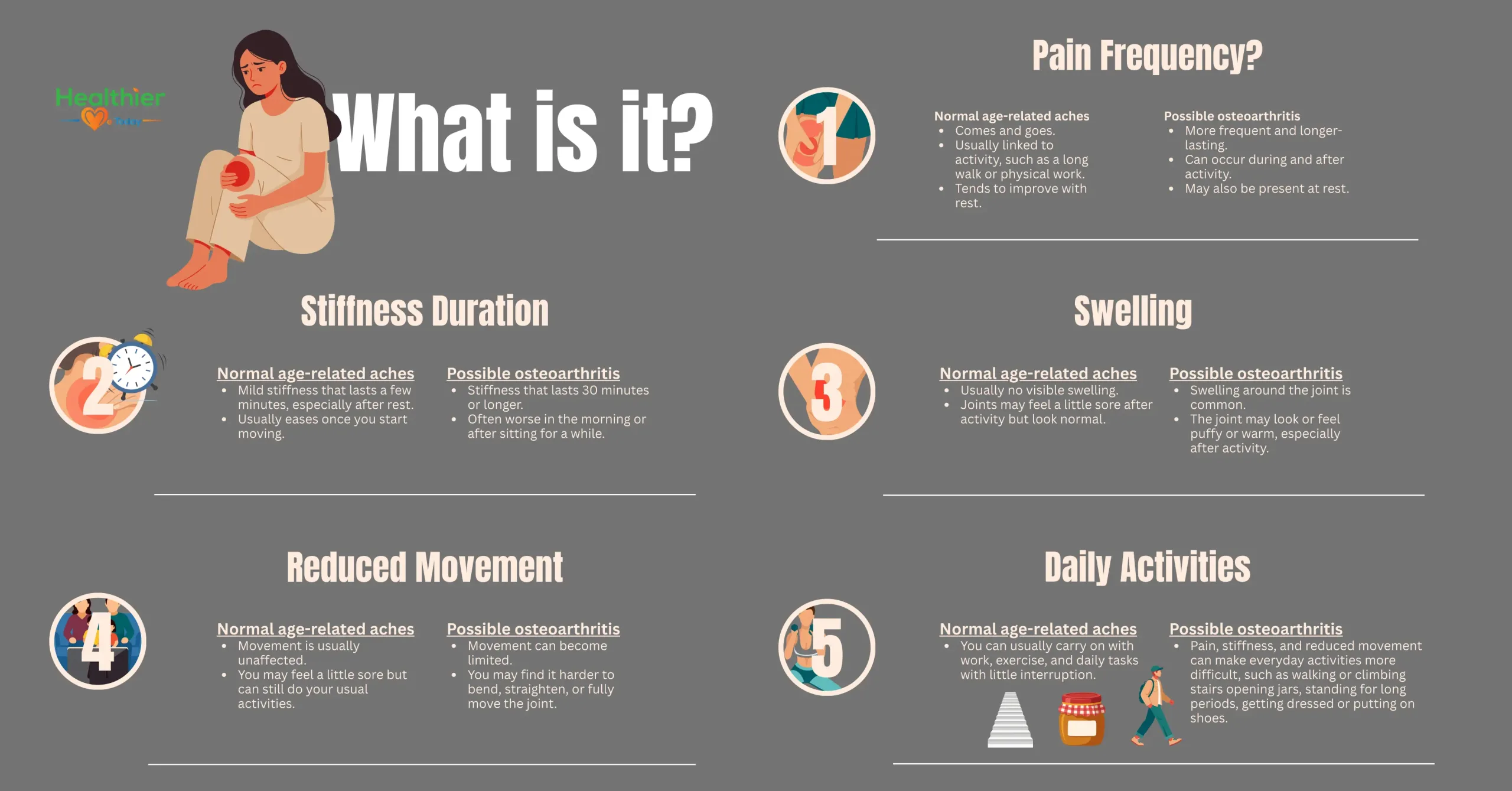 Learn how recurring joint pain, prolonged stiffness, swelling, and reduced movement may differ from typical age-related aches.
The early signs of osteoarthritis can be subtle enough that you don’t think much of them at first. Instead of constant pain, you may notice small changes in the same joint that keep coming back.
- Pain during or after activity: Your knee may ache after taking the stairs, or your hip may bother you after a longer walk.
- Stiffness after resting: Getting up after sitting for a while may take a moment for the joint to feel comfortable again.
- Less movement: You may find it harder to bend, straighten, or move the joint as far as you once could.
- Tenderness: The joint may feel sore or sensitive when you touch or press around it.
- Everyday tasks feel harder: Opening a jar, getting out of the car, climbing stairs, or walking longer distances may take more effort than before.
One of these changes on its own doesn’t necessarily mean you have osteoarthritis. What matters more is whether the same symptoms keep returning or you have started changing how you do things because of the discomfort.
How do you know if it’s osteoarthritis?
Osteoarthritis is about more than having a painful joint. Where the pain occurs, when stiffness starts, how long it lasts, and whether you have swelling or changes in movement can all help build a clearer picture. These signs can point toward osteoarthritis, but a healthcare provider will need to confirm the cause.
Pain alone can’t tell you which type of arthritis you have
Joint pain can happen with several types of arthritis, and the pain itself can feel very similar. Osteoarthritis, rheumatoid arthritis, and gout can all leave a joint sore or uncomfortable, which makes it difficult to tell them apart based on pain alone.
Other symptoms and patterns can help show that something different is going on. How quickly the pain starts, whether the joint becomes swollen or warm, and how stiffness behaves can vary between conditions. This is why one painful joint doesn’t automatically mean osteoarthritis.
Which joints are most commonly affected?
Osteoarthritis most often affects the knees, hips, hands, neck, and lower back. Weight-bearing joints are commonly affected. When osteoarthritis knee symptoms develop, everyday movements such as walking, bending, or taking the stairs can become more uncomfortable.
In the hands, osteoarthritis tends to affect the base of the thumb and the joints in the fingers. It can also develop in the spine, particularly around the neck and lower back. You can have osteoarthritis in one joint or in several joints at the same time.
What causes osteoarthritis?
The exact causes of osteoarthritis aren’t always clear, and there is rarely a single reason it develops. As you get older, the tissues in your joints naturally change, which can increase your risk. Your genes can also make you more likely to develop osteoarthritis, while extra body weight puts more pressure on joints such as your knees and hips.
How your joints are shaped and how much stress they handle over the years can make a difference too. If you have injured a joint in the past, that damage may increase your risk of developing osteoarthritis later, even if the injury hasn’t bothered you for years.
An old injury can come back to affect a joint years later
That knee injury from your twenties may feel like it’s been too long ago to matter now, especially if it healed and stopped hurting. However, damage from a previous injury can alter the structures or mechanics of a joint and increase the risk of developing osteoarthritis there later in life [siortho.com].
This does not mean every fracture, ligament injury, or sports accident will lead to osteoarthritis. It does mean that an old injury is worth mentioning when a joint starts causing problems. Tell your healthcare provider about previous injuries or operations involving that joint, even if they happened many years ago.
How is osteoarthritis diagnosed?
Diagnosing osteoarthritis starts with your symptoms and what has been happening with the affected joint. Your healthcare provider will ask about your pain and stiffness, how long you’ve noticed the changes, and whether certain movements have become more difficult. They may also examine the joint for swelling, tenderness, and range of motion.
An X-ray can help show changes inside the joint, but you won’t always need imaging to reach a diagnosis. Blood tests or a sample of joint fluid may be used when another condition could be causing your symptoms. These tests don’t diagnose osteoarthritis directly, but they can help rule out other types of joint problems. The need for imaging or other tests depends on your symptoms and your healthcare provider’s assessment.
How is osteoarthritis treated?
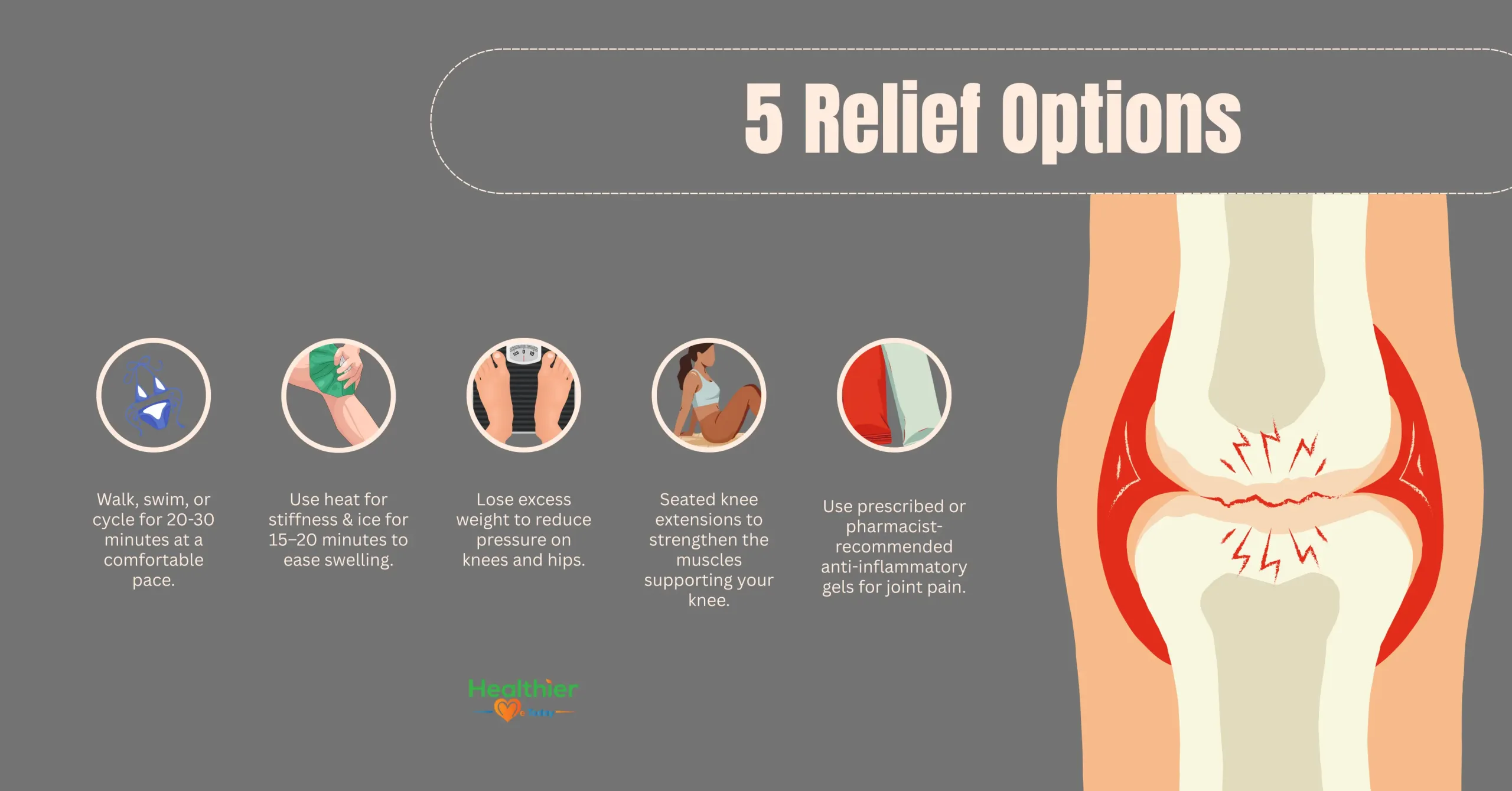 Low-impact exercise, appropriate heat or ice therapy, strengthening exercises, weight management when needed, and suitable topical medicines may help manage osteoarthritis symptoms.
Osteoarthritis treatment focuses on easing pain, keeping your joints moving, and making everyday activities easier. Your treatment plan will depend on which joints are affected, how much your symptoms interfere with daily life, and your overall health. It may include:
- Exercise: Regular movement like walking can help maintain flexibility and strengthen the muscles that support your joints.
- Weight management: If needed, losing excess weight can reduce pressure on weight-bearing joints such as your knees and hips.
- Medication: Treatment options may include topical NSAIDs, such as diclofenac gel, or oral anti-inflammatory medicines such as ibuprofen or naproxen. The most appropriate option depends on the affected joint, your medical history, and potential side effects. Acetaminophen may help some people, but evidence of its benefit for osteoarthritis is limited. Ask your healthcare provider which option is suitable for you.
- Physical therapy: Physical therapy for osteoarthritis can help improve strength, mobility, and use of the affected joint.
- Supportive devices: Braces, walking aids, or other devices can provide extra support and make certain activities easier.
- Joint injections: In some cases, injections may provide temporary pain relief.
Surgery is generally considered when other treatments haven’t provided enough relief and osteoarthritis is having a major effect on your mobility or quality of life. There isn’t one approach that works for everyone, so your healthcare provider can help you build a treatment plan around your symptoms, health, and what you need to keep doing day to day.
Here is what food you should avoid when it comes to arthritis and inflammation.
When should you see a healthcare provider?
You should speak with a healthcare provider when joint pain or stiffness keeps coming back, gets worse, or starts changing what you can comfortably do. Osteoarthritis pain symptoms don’t have to be severe before they are worth checking. Make an appointment if you notice:
- Ongoing pain or stiffness: The same joint keeps bothering you or takes longer to feel better after you rest.
- Swelling that keeps returning: The joint often appears or feels swollen, especially after activity.
- Changes in movement: Bending, walking, gripping, or using the joint has become more difficult.
- Changes to your routine: You have started avoiding stairs, taking shorter walks, or skipping some activities because they cause you discomfort.
If a joint becomes very painful, hot, red, or swollen, and you also have a fever or feel unwell, seek medical help quickly. It’s also important to get checked right away for severe joint pain after an injury. Sudden joint swelling or severe pain can have causes other than osteoarthritis, so prompt medical assessment is important rather than assuming it is an arthritis flare.
Conclusion: Don’t Write Off Every Joint Change as Getting Older
Getting older doesn’t mean you have to accept every new ache as something you have to live with. A knee that keeps giving you trouble or fingers that are becoming harder to use deserve a proper explanation, especially when the problem starts getting in the way of things you normally do.
Not sure whether what you’re feeling fits that picture? Go back to the “Is It Arthritis or Just Getting Older?” guide and compare it with your own symptoms. It can give you a few useful points to bring up at your next appointment. The sooner osteoarthritis is picked up and treated, the sooner you can work on keeping the affected joint strong, mobile, and easier to live with.